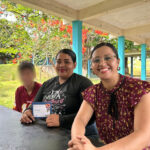

After a night shift and only a couple of hours of sleep, Angela went to a detention center in Costa Rica for an information workshop. She knew she could not see her brother, but wanted to learn how to advocate for him.
Angela knew she would not be allowed to see her brother. She went to the detention center anyway.
The night before, she had worked the night shift. She went home, slept for a couple of hours, and then headed to the detention center.
Angela told us that her brother was being punished by losing several family visits. She did not know what he was being punished for. She knew that he would be unable to see his family for several weeks, including that day.
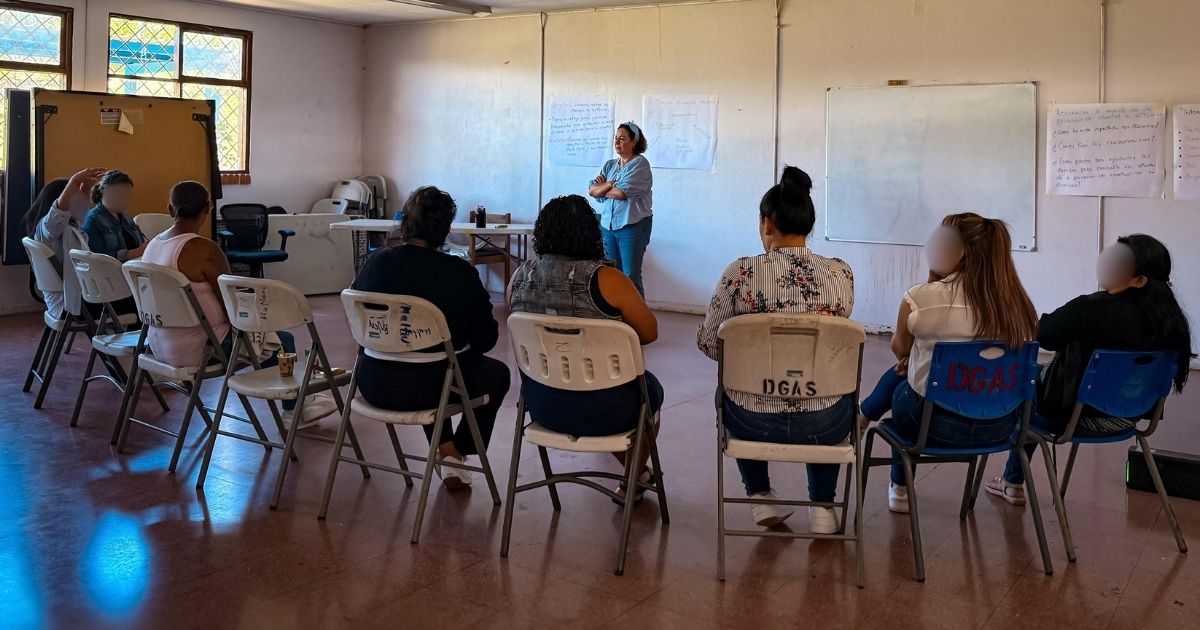
She had come to attend JJAI’s Family Committee to learn more and become better equipped to advocate for her brother. Even when she could not visit him, she wanted to understand what she could do on his behalf.
Through Mobilize & Empower, JJAI organizes family committees and workshops that equip families to advocate for their children. These spaces bring relatives together to learn about rights and raise concerns about the conditions and treatment young people experience in detention.
When family visits are taken away, relatives lose a chance to see how a young person is doing and maintain their connection. When they are also left without clear information, it becomes harder to understand what happened or how to raise a concern. Angela’s experience shows why family advocacy must be accompanied by institutions willing to listen and respond.
Angela told us it broke her heart when her brother was arrested and detained. She had been visiting him since the first week of his detention. Her family had expected him to be released a couple of months earlier. Instead, she said, he was sentenced to an additional year.
She was very worried about him. He had always been thin, she explained, but was now not eating because he was so depressed about another year behind bars. With visits withheld for several weeks, Angela could not see him at a time when she was deeply concerned about his well-being.
The standardsProtecting Family Contact From Punishment
International standards treat family contact as a right.
UN Rules for the Protection of Juveniles Deprived of Their Liberty
Calls for prohibiting the restriction or denial of contact with family members for any purpose.
Convention on the Rights of the Child
Protects contact through visits and correspondence, except in exceptional circumstances.
Angela’s account raises concerns about the use of family contact as a disciplinary measure and the information provided to relatives trying to advocate for a young person.
- Whether their disciplinary practices protect family contact
- How decisions are explained to young people and their families
- How relatives can raise concerns
Families need a clear way to question a decision and receive a response.
Youth Justice Action Month 2026Why JJAI Is Joining Youth Justice Action Month
JJAI is joining Youth Justice Action Month 2026 because its call to Build a Future Where Youth Thrive asks us to look at what young people and families actually experience inside justice systems. Angela’s story makes the distance between a right on paper and daily practice impossible to ignore. This month gives us a chance to bring families’ questions into a wider conversation—and ask institutions what they are doing to close that gap.
Listening to families is part of our work to change institutions.
Facility Assessment Resource Hub
Gives assessment teams tools to examine conditions and practices in youth detention facilities.
Alternatives to Detention Toolkit
Supports institutions in Latin America working to reduce unnecessary detention.
Together with family committees, these efforts connect families’ experiences to the decisions and practices that need to change.
What changes when the people most affected by a decision have a way to be heard?
After working through the night and sleeping for only a couple of hours, Angela showed up to learn how to advocate for her brother. This Youth Justice Action Month, we invite institutions to examine the practices that keep families apart and create meaningful ways for families to influence the conditions and treatment of young people in detention.
If you work in a youth detention facility, how do you ensure that family contact is protected and that families’ concerns lead to action?
Connecting families. Changing systems.