We are working to break that cycle.
In Central America, families whose children end up in the juvenile justice system didn’t get there by accident.
They are almost always the same families, the poorest, the most exposed to violence, the farthest from real opportunity. The ones who grew up in places where the State never showed up, except to lock up their children.
The State didn’t invest in them. But it does invest in detaining their kids.
In January and February, we supported family reunifications in juvenile detention centers in Honduras. More than 15 young people received visits from their families, many for the first time.
In one group we accompanied, 4 out of 5 families were visiting for the first time. Three of those parents cannot read or write.
Coordinating just one visit took weeks. No access to bank transfers. Fear of getting lost. Inability to read directions.
And this is not unusual.
Some young people are in detention partly because their families didn’t show up to a hearing. But no one asked why.
- They live far away.
- They were notified last minute.
- They didn’t have bus fare.
- They can’t read the paperwork.
- They’re afraid to travel alone.
Multiple barriers. No questions asked.
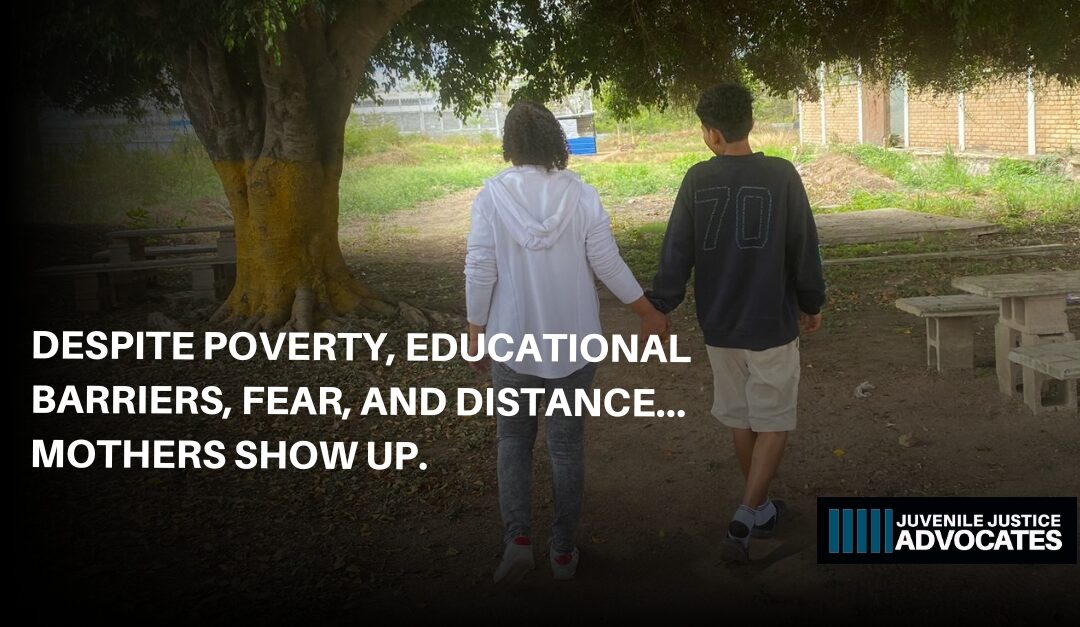
One mother arrived having not eaten, head down, deeply ashamed. By the end of the session, she understood something powerful: her presence matters. She does not need to carry shame for what happened to her son.
A grandmother arrived late, exhausted, after getting lost on the way. But she came. Because she said, “If I don’t go, no one will.”
That’s what the system never measures, the invisible effort of families who carry everything: poverty, illiteracy, fear, and still show up.
At JJAI, we remain convinced that family connection is one of the most powerful factors in a young person’s process.
Not as a symbolic gesture. As a real tool for change.
That’s why we mobilize resources so families can travel. Why we coordinate, call, explain, and accompany.
Why we create spaces where a mother who cannot read can still understand that she has rights. That her child has rights. That her presence is not optional, it is essential.
As long as governments fail to invest in real opportunities for the most vulnerable families, the cycle will continue: poverty, violence, detention, abandonment.
Breaking that cycle starts with something simple:
Asking why the family didn’t show up. We keep trying.
We keep showing up. 💛 Restore the Circle | JJAI 🔗 https://www.jjadvocates.org/restore